Muscle mass naturally begins to decline from the age of 30
For a long time, muscle mass was mainly associated with athletic performance or aesthetics. Today, research shows that it is one of the important indicators of long-term health.
Preserving your muscles is not only about staying strong. It is about preserving your mobility, your independence, your metabolism, your balance, your quality of life and your chances of ageing in good health.
From the age of 30 to 35 years, the body gradually begins to lose muscle mass. This decline is slow at first, then accelerates after the age of 60, and even more so after 70.
This natural phenomenon has a name: sarcopenia. It is influenced by several factors:
- ageing;
- reduced physical activity;
- a diet with insufficient protein;
- certain chronic diseases;
- hormonal changes, in particular menopause.
Muscles: a true organ of longevity
Muscle is not only a motor that allows you to move. It also plays a major metabolic role.
In particular, muscles contribute to:
- blood sugar regulation;
- insulin sensitivity;
- glucose storage;
- daily energy expenditure;
- maintaining bone density;
- balance and fall prevention;
- the functioning of the immune system;
- the production of molecules called myokines.
In other words, preserving your muscles means protecting a large part of the functions that allow you to remain independent, mobile and healthy.
Why losing muscle reduces quality of life
When muscle mass gradually declines, the consequences go far beyond physical strength.
Muscle loss promotes:
- a decrease in metabolism;
- an increase in body fat;
- insulin resistance;
- reduced mobility;
- an increased risk of falls and fractures;
- slower recovery after illness or surgery;
- a gradual loss of independence.
In older people, sarcopenia is associated with a higher risk of hospitalisation, dependency and mortality.
It is important to note that it is not only muscle mass that matters, but also its quality and, above all, its strength. Many studies show that muscle strength is one of the best indicators of health and longevity.
Why protein becomes more important with age
With ageing, muscle responds less efficiently to dietary protein. This phenomenon is called anabolic resistance.
In other words, an amount of protein that is sufficient at 30 no longer stimulates muscle synthesis in the same way at 70.
This is why recent scientific recommendations often propose higher intakes than the historical minimum recommendations.
Today, many experts recommend:
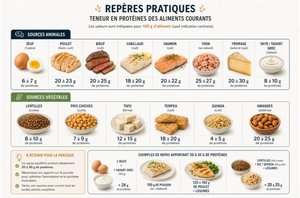
- 1.0 to 1.2 g/kg/day for most adults;
- 1.2 to 1.5 g/kg/day for active seniors or people wishing to preserve their muscle mass.
The goal is not to eat ever more protein, but to provide enough quality protein, spread throughout the day.
Protein alone is not enough
Nutrition plays an essential role, but it does not replace movement. Muscles develop and are maintained when they are used.
The most effective habits are:
- regularly doing muscle-strengthening exercises, ideally 2 to 3 times a week;
- walking daily;
- staying physically active throughout the day;
- consuming enough protein at each meal;
- getting enough sleep;
- avoiding long periods of inactivity.
It is these habits repeated over several years that make it possible to retain strength, mobility and independence.
Protein: an investment for the decades to come
It is often tempting to wait until retirement or the first signs of ageing to change your diet.
Yet the best time to protect your muscle mass is well before it begins to disappear.
Gradually building dietary habits rich in quality protein, combined with regular physical activity, is one of the best investments for ageing in good health.
It is not about seeking maximum muscle mass, but about preserving enough muscle to continue to fully enjoy your life for decades.
How Allcook can help you
Preserving your muscle mass does not require complicated meals or constant calculations.
- Allcook meals generally provide 30 to 40 g of protein per portion.
- Some recipes combining several protein sources can reach 45 to 50 g.
- Two Allcook meals thus provide approximately 60 to 80 g of protein per day.
It is often enough to add a protein-rich breakfast or snack to cover the needs of many adults.
Combined with regular physical activity, these intakes help preserve muscle mass throughout life.
Conclusion
Ageing does not begin at 70. It begins silently in your thirties.
Muscle loss is a natural phenomenon, but its speed depends largely on our daily habits.
Current research shows that a diet sufficiently rich in protein, combined with an active lifestyle and regular muscle-strengthening exercise, is one of the most effective strategies for preserving health, independence and quality of life over the decades.
Ageing well is not about stopping time. It is about retaining enough strength, mobility and energy to continue living life to the full.
Scientific references
- Cruz-Jentoft AJ et al. Sarcopenia: revised European consensus on definition and diagnosis
- Li R et al. Associations of muscle mass and strength with all-cause mortality
- Weiler M et al. Is it time to reconsider protein and amino acid recommendations?
- Devries MC, Phillips SM. Supplemental protein in support of muscle mass and health
- PROT-AGE Study Group. Protein intake and exercise for optimal muscle function with aging